In this guide
The great British garden shed is a brilliantly versatile garden building that serves a multitude of purposes. It provides additional storage space; protects your gardening equipment and tools; gives you a place for potting plants and growing seeds; or offers a special little space just for you.
Sheds come in a wide range of sizes and materials, which can make the buying process seem a little tricky. That's why we've created this in-depth guide to explain the different types of sheds and help you work out which one best serves your needs.
Our comprehensive guide includes detailed information and advice on every aspect of your new shed including:
Purpose
What will your shed be used for?
Taking the time to plan what you will use your shed for is the first place to start. Will it be used for storage? Perhaps you're looking to create a hobby room? Or maybe you're looking for a place to work in? To get you thinking, we'll begin by outlining some general purposes and pointing you in the direction of the perfect garden building for that use.
Storage
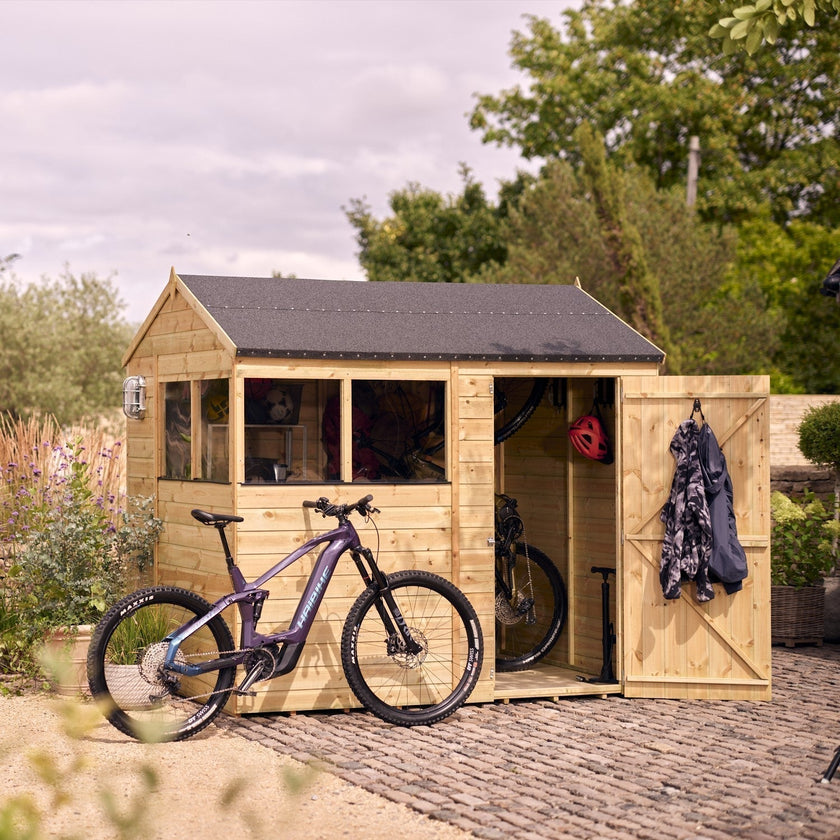
Are you looking for somewhere to store garden and household items that you want to keep tidied away? If this is the case - a garden shed is the perfect option. With various materials and sizes to choose from, as well as a wide price range from great value sheds to more premium workshops, there is guaranteed to be a shed to suit you. If you're looking to store individual or small items, you may even want to explore garden storage options, such as bike stores and mower stores.

With a variety of styles available you are sure to find the perfect shed for your garden
Outdoor Living
If you're looking for a garden building in which you can spend lots of time during the summer, whether that's hosting guests, practising a hobby or settling down with a good book, a summerhouse would fit your requirements perfectly. You can check out our summer house buying guide to get all of the details! However, if you're looking for a garden building to use all year round for entertaining, as a home office, personal gym or even guest accommodation a log cabin or insulated garden room would be ideal for you. These items may cost a little more but with the option for an insulated shell, thick walls and additional windows - you would definitely not be disappointed.

Ideal for creating your very own man-cave or she-shed
Image: Waltons 10x10 Premium Shiplap Workshop
Work and Hobbies
A large wooden garden shed or workshop is a cost-effective and quick way to create the perfect space for DIY projects, hobbies or work spaces, allowing you to escape the chaos of everyday life and regain living space within your home. With sizes ranging from 10ft x 12ft to a huge 20ft x 10ft, and the option to upgrade finishes - this guide will help you identify exactly what you need to look for in your garden shed.
If you're looking for a home office to work from home all year-round, check out our garden rooms and log cabins.

Solve all your planting and storage issues in one
Image: 8x8 Woodsman Combi Greenhouse from Waltons
Growing
As somewhere to plant and pot, or storage for your allotment - a garden shed would be perfect, with space for shelving for propagating and storage for gardening tools. However if you're looking to grow strong plants, it would be worth considering a greenhouse or combi-greenhouse that will extend the growing season.
Check out the full range of garden sheds
Size
What size shed do you need?
Sheds come in all shapes and sizes, from a small 5 x 3 bike store to a huge 20 x 10 workshop. The guide below takes you through some different sizes and what they can do for you. To choose what size shed to buy, answer to questions: 1) how much space do you need for what you want to do and store in your shed?; 2) do you have enough space in your garden for a shed that big? If the answer to question two is no then reduce your ambitions and answer the questions again.
Top tip: Not all 8 x 6 sheds are that exact measurement, this applies to all garden sheds. The sizes are approximate measurements that act as a general size starting point. So always be sure to check the specification of your shed for exact dimensions.
|
Small Storage |
Small Sheds |
Medium Sheds |
Large Shed/Workshop |
|
|---|---|---|---|---|
 |
 |
 |
|
|
| Size | 3ft x 2ft - 6ft x 4ft | 6ft x 4ft - 8ft x 6ft | 8ft x 6ft - 12ft x 10ft | 12ft x 10ft - 20ft x 10ft |
| Ideal use |  |
 |
 |
 |
| Description | For storing your smaller items, such as tools, a bike or a lawn mower, Waltons has specific sheds designed for those needs; anything between a 5 x 4 and 6 x 4 is ideal. Just enough space for your small equipment and tools! | If you're looking for somewhere to store bikes, tools and small equipment that doesn't take up too much of your garden - take a look at a shed between 6 x 4 - 8 x 6. | A medium shed, between 8 x 6 and 12 x 10, is ideal for storing garden furniture, lawn mowers, wheelbarrows, gardening tools, equipment and more! This is best for those with a spacious garden. | For those looking to store very large items or to work in regularly, a 12 x 10 - 20 x 10 workshop is perfect. These larger sizes are ideal for those with large gardens and plenty of space to spare. |
Check out the full range of garden sheds
Location
When choosing the size of your shed, you must think about where you are going to put it. Some things you'll need to consider:
- The space around your shed; you must leave at least 60cm around your shed for annual maintenance
- Check you have enough space to open the doors and windows
- Choose a location with firm ground so you can install a strong and level base for your shed to sit upon
- Avoid placing under trees as falling debris could damage your building

A Portabase is a great base solution for your shed
Image: Wooden shed base with partial floor construction
Materials
Wood, metal or plastic?
Sheds are traditionally built using wood which is easy to work with, customisable and looks great in your garden. However over the years different options have been developed to offer more choice for those who are looking for a different finish, low maintenance and a lightweight build. There are three construction materials to choose from: wood, metal or plastic.
The decision is based on your preference, as there are pros and cons for all options. We've broken this down for you in this table below to help you choose the right material for your shed.
|
Wooden Sheds 
|
Plastic Sheds 
|
Metal Sheds 
|
|
| Description | A classic wooden shed offers an attractive, premium look. It's easy to customise and can serve many purposes. | A plastic shed offers a strong and affordable solution that requires no annual maintenance and is built to last! | Metal sheds are long lasting and virtually maintenance-free. They come in various colors, making a practical addition to any garden. |
| Ideal use | Storage, workshop, or leisure space | Storage | Storage |
| Maintenance | Annual treatment, visual checks for damage to timber, re-felting | Virtually maintenance-free | Virtually maintenance-free |
| Security | ★★★★☆ | ★★★★☆ | ★★★★☆ |
| Comfort to work in | ★★★★☆ | ★★★☆☆ | ★★★☆☆ |
| Customisable | ★★★★★ | ★★★☆☆ | ★★★★☆ |
| Cost | £200 - £1800 | £300 - £700 | £200 - £1000 |
| Easy to build | ★★★★★ | ★★★★☆ | ★★★☆☆ |
| Weatherproof | ★★★★☆ | ★★★★★ | ★★★★★ |
Check out the full range of garden sheds
Cladding Style
Cladding is the timber boards that make up the walls of your shed. Within garden sheds there are three main types of cladding that offer varying strengths, waterproofing and cost, as well as aesthetic. We've broken down each cladding style to help you decide which cladding style is best for your requirements.
|
Overlap Cladding |
Pressure Treated Shiplap Cladding |
Log Cabin Construction |
|
|---|---|---|---|
| Profile |  |
 |
 |
| Description | Overlap cladding is manufactured using 10mm thick panels that are nailed to vertical, internal framing with an overlapping profile. Overlap cladding is the easiest and cheapest construction. | Pressure treated shiplap cladding is manufactured using thick, 12mm tongue and groove boards that lock together and are then nailed to vertical internal framing. This cladding offers additional protection against elements. | Our Log Cabins work a little differently! Rather than cladding that attaches to an internal framing, the log boards lock into each other with a tongue and groove joint to protect against water ingress and draughts. This cladding is supplied untreated. |
| Strength | ★★★☆☆ | ★★★★☆ | ★★★★★ |
| Weatherproof | ★★★☆☆ | ★★★★☆ | ★★★★★ |
| Secure | ★★★☆☆ | ★★★★☆ | ★★★★★ |
| Insulation | ★★★☆☆ | ★★★★☆ | ★★★★★ |
| Cost Effective | ★★★★★ | ★★★★☆ | ★★★☆☆ |
Roof & Floor
Choose either solid sheet board or tongue and groove boards for your shed's roof and flooring, depending on its intended use. Read about the benefits of each below..
|
Solid Sheet Board |
12mm Tongue & Groove Boards |
||
 |
 |
||
| This material is perfect for everyday use and will form a strong base or ceiling to your building. Solid sheet board is an engineered wood formed by adding adhesive and then compressing layers of oriented strands of wood to form a strong and robust panel. If you require a more heavy duty flooring for holding large tools and equipment, you may want to think about upgrading to tongue and groove. | 12mm Tongue & Groove boards make the perfect roof and floor for frequently used buildings as well as those that will be storing heavier items such as work benches, tools or furniture. The boards interlock to form a tight seal, helping them spread the load within the building. It's always recommended to upgrade to tongue & groove boards if you plan to spend a lot of time within the building or if you're storing heavier items. |
Window Glazing
Most sheds with windows will be glazed with Polystyrene plastic, typically known as Styrene. This material is perfect for garden sheds as its both safe and shatterproof - perfect for busy gardens!
|
Styrene Glazing |
San Styrene Glazing |
||
| Styrene is a lightweight product that offers a safe and shatterproof alternative to traditional glass - the ideal material for garden shed glazing. | SAN styrene glazing is a high strength, safe and shatterproof glazing that is fitted to the most premium garden sheds, such as log cabin sheds. |
Roof Covering Options
It is essential for your shed to be covered with some form of roofing felt that will protect it against the elements, aid the drainage of rainwater and keep your garden shed in the best condition! There is a range of felt options you can choose from that offer different levels of protection. Flick through to see the key difference.
|
Mineral Felt |
EPDM |
||
 |
 |
||
| Mineral felt is designed to protect you building against whatever the weather can throw. This heavyweight felt is 50% thicker than standard felt, with a glass fibre and bitumen base. Ideal for buildings in an exposed area it provides a tough, durable and weatherproof membrane. | Is a tough synthetic rubber membrane, designed to give the best protection against the elements. It is best fitted by a professional or experienced DIYer. Over 50 year lifespan. |
Shape
You may be surprised to know that there is actually a wide range of shed shapes you can choose from; the three most common shapes include apex, reverse apex and pent. However there are a few more obscure shapes that might also take your fancy. Use the descriptions and examples in the table below to help you choose your preferred shape:
Top Tip: You might decide to choose the roof shape you most like the look of but you should also consider:
Height - At the entrance and inside, for yourself and anything you might want to store.
Planning Permission - There may be a height restriction depending on where you live or the position of your shed relative to your house. See Waltons' guide to planning permission.

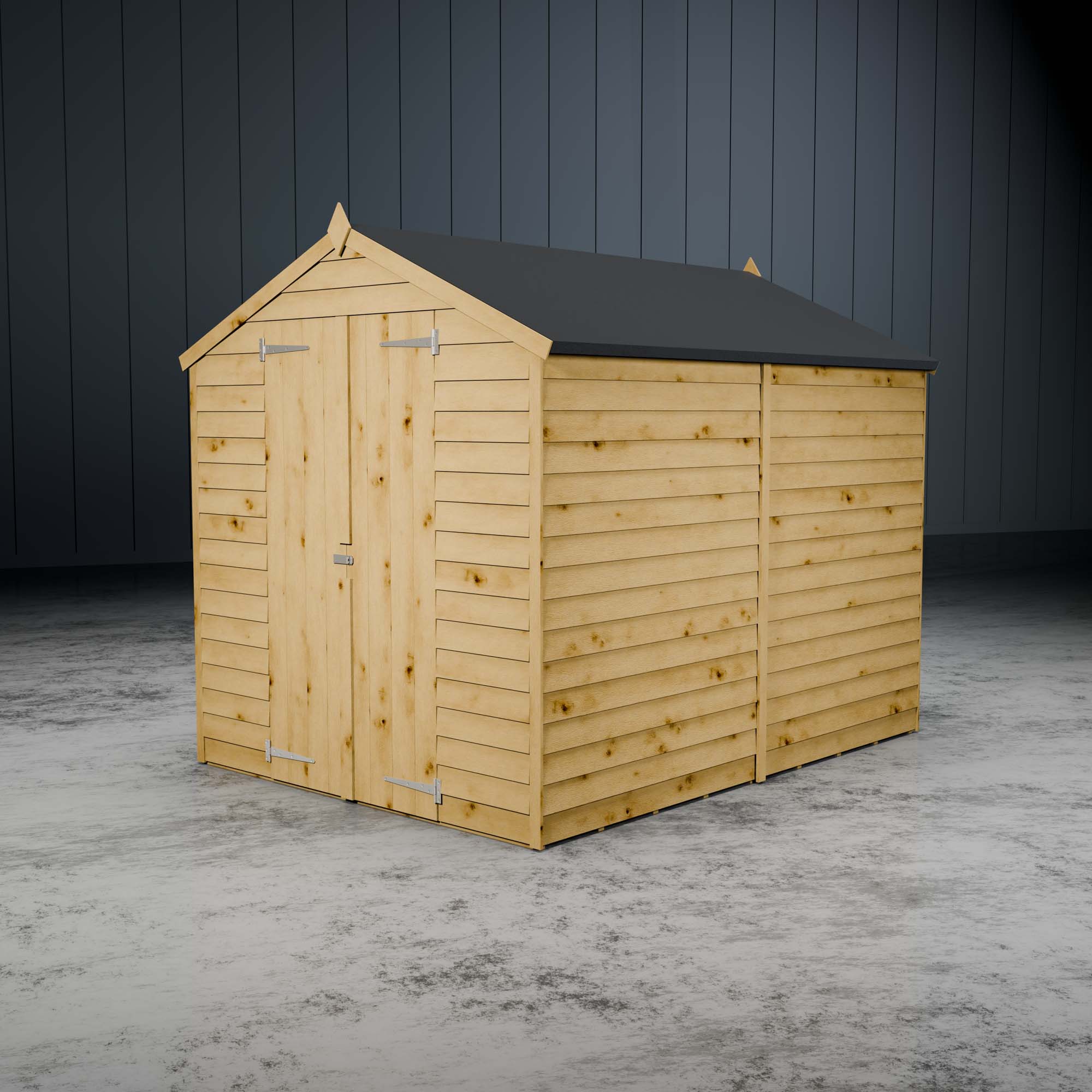
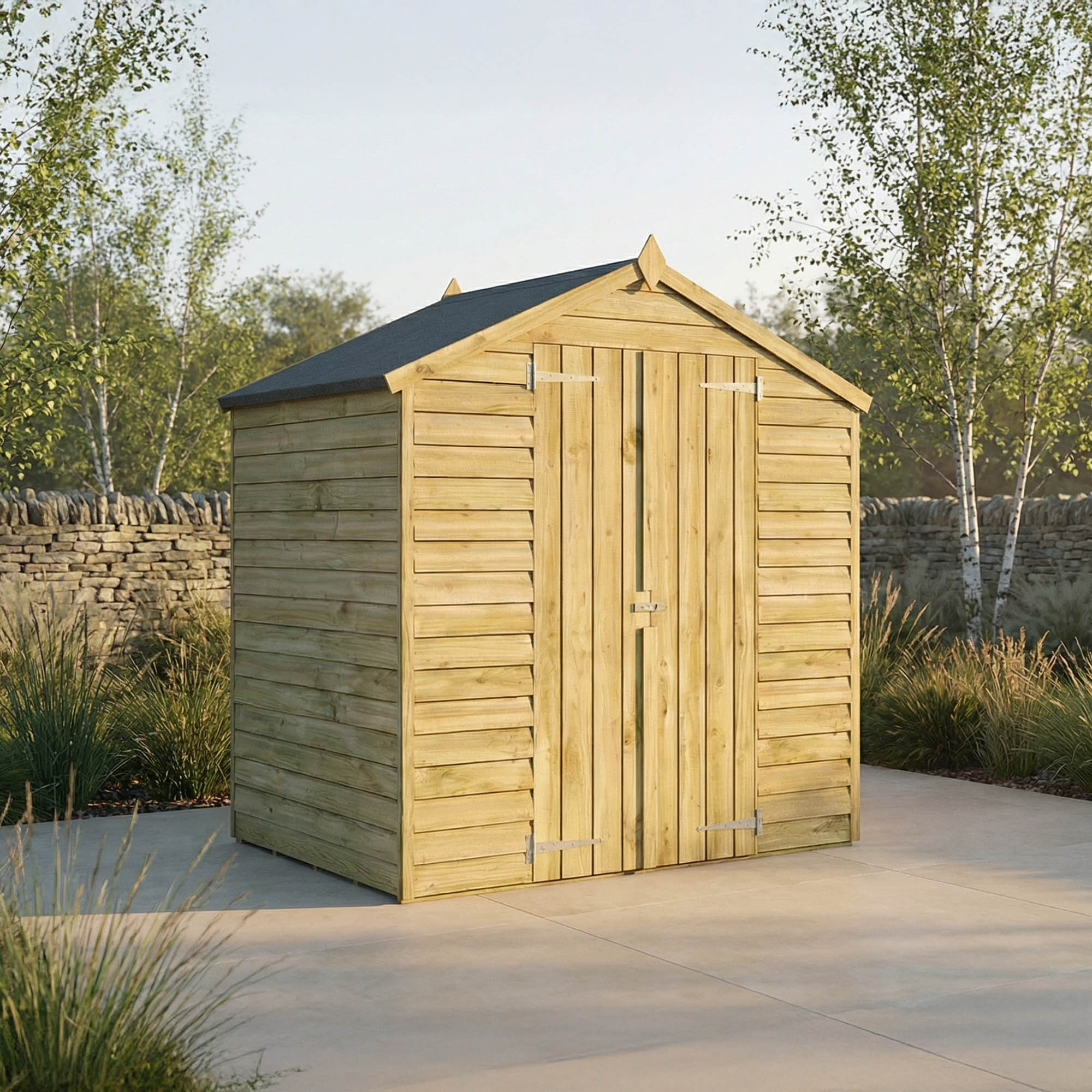
An apex roof gives headroom
Image: Waltons Overlap Double Door Apex Shed
Apex
An apex roof is a classic design that offers a traditional design to the building. With an apex shed, the highest point of the roof is central, where the two wooden roof sections meet. This is great for those who plan to do a lot of work inside their shed, as the optimum head height is central.

Reverse apex workshop with side door
Image: Waltons Reverse Apex Shed
Reverse Apex
Similarly to the apex roofline, the highest point of the roof is the centre, where the two wooden panels meet, except this runs from side to side, rather than front to back. This creates a space to work comfortably with plenty of head room. Boasting a classic and traditional aesthetic, this style of roof is elegant and stylish.
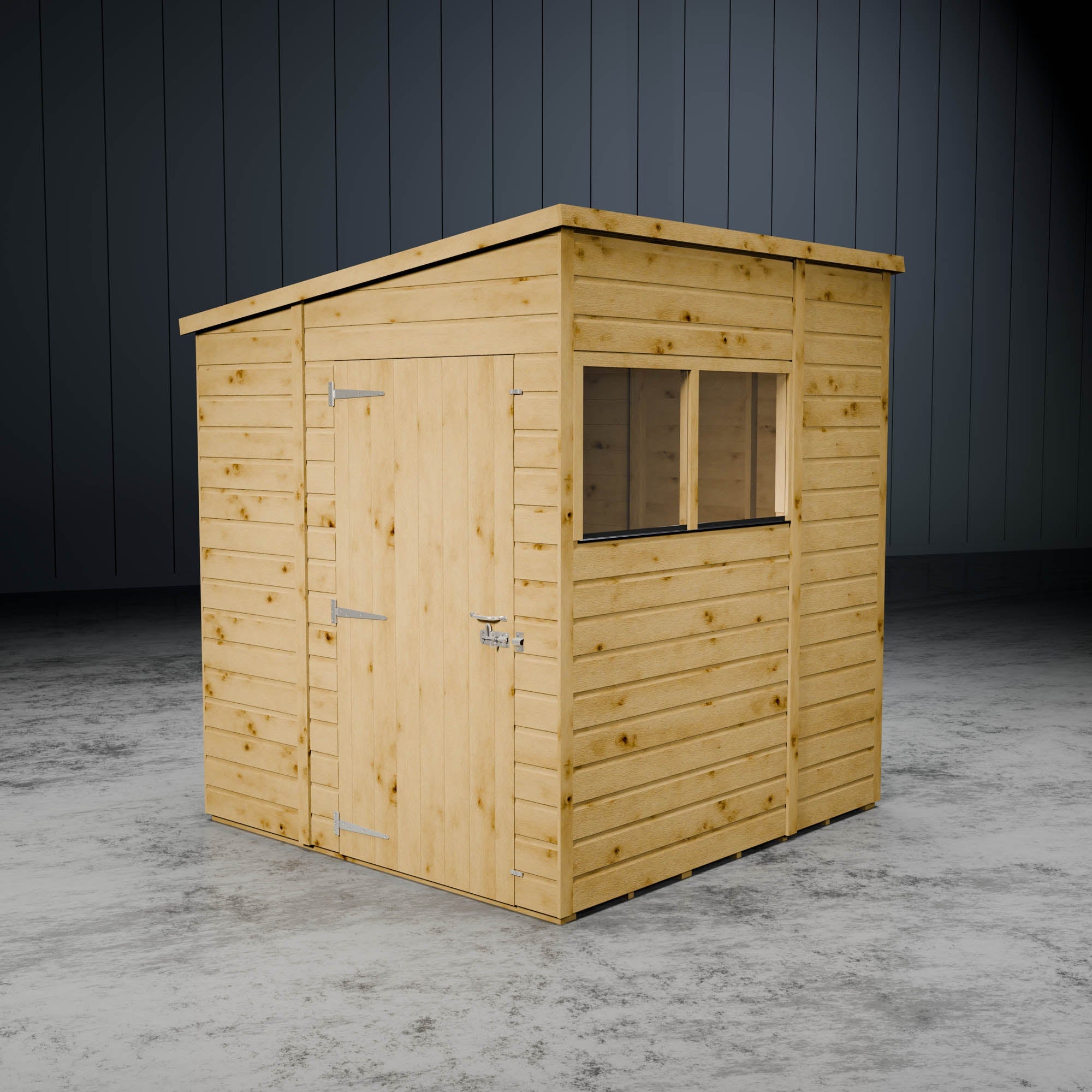
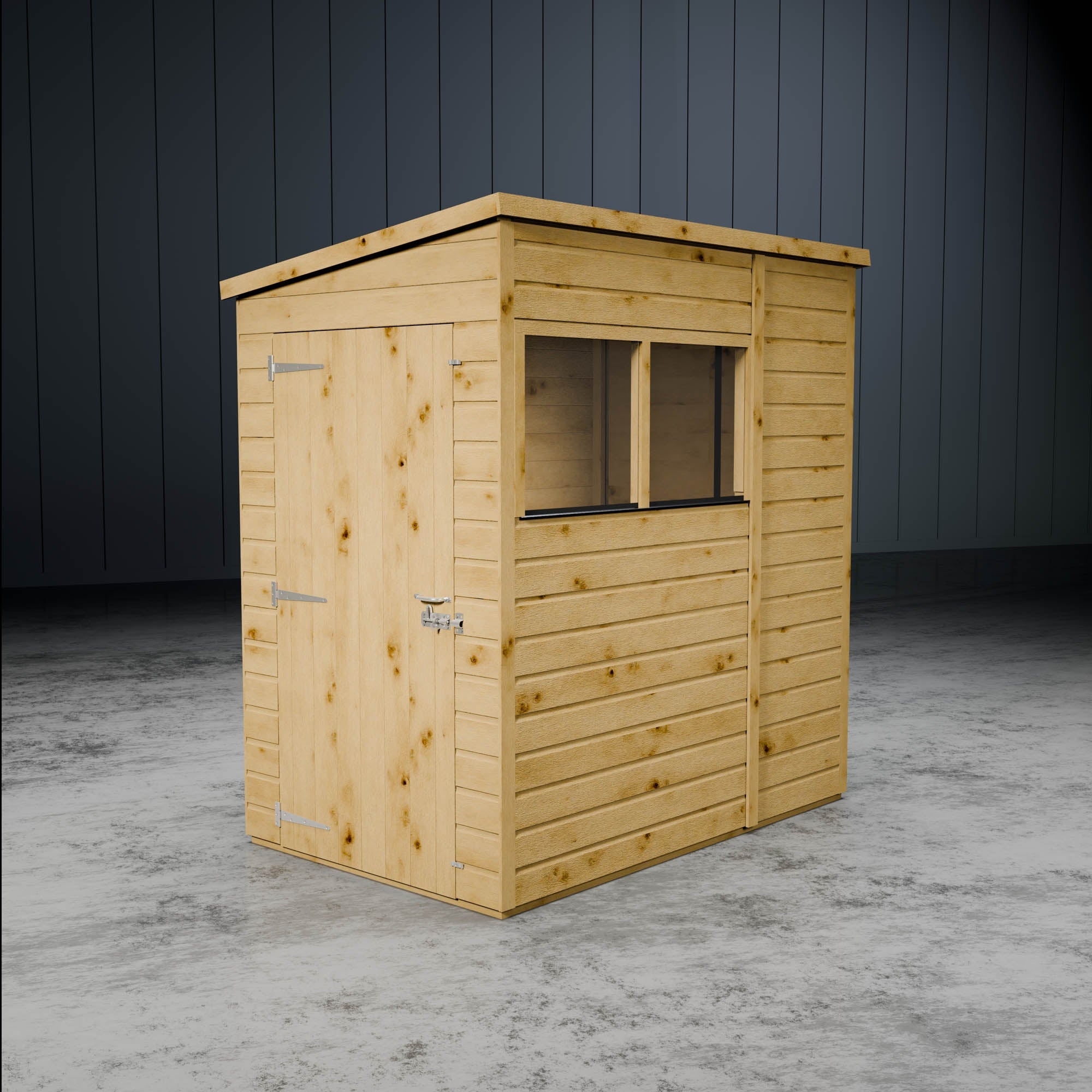
A pent shed has a modern look
Image: Waltons Woodsman Shiplap Pent Shed
Pent
Features a flat single panel which slopes from the front to the back. The slope provides sufficient height for the door at the front but also ensures rain can run off the back of the building. Pent sheds offer a stylish contemporary look but are also extremely practical. Ideal for being situated close to a wall or fence.

A curved roof is stylish and contemporary
Image: Waltons 4m x 3m Helios log cabin
Curved
A curved shape shed is similar to a pent shed however the roof has a rounded slope as opposed to flat. The unique curved slope is both stylish and practical, allowing rain water to run off the back. The curve also ensures a higher head height throughout the building in comparison to a pent shed.

A dutch barn roof is distinctive and practical
Image: Waltons 8x8 Shiplap Dutch Barn
Barn
A barn shaped shed is the most traditional of all the options and can create a real focal point in your outdoor space. The wide design maintains internal height, perfect for storing items that require plenty of vertical space or if you were looking at storing items within the roof space.
Maintenance
How much maintenance does a shed require?
All sheds require looking after, including clearing debris and checking for damp and mould caused by condensation. If you're looking for a very low maintenance shed, we would recommend going for a plastic or metal shed, as a wooden shed will always require some additional upkeep. The natural material of a wooden shed can be affected by the elements, from simple seasonal changes in temperature to extreme weather conditions that may cause swelling and shrinking, cracking and natural decay. However, there are options you can choose to minimise the maintenance required.
A wooden garden shed will have a treatment applied before it leaves the factory that will determine how much maintenance it will need. This will be either dip treatment or pressure treatment. You may even opt for a ready painted garden building that offers the maximum protection, and the lowest maintenance finish of all wooden sheds. Below, we've explained the key differences between dip treatment and pressure treatment, and gone into detail about how a ready painted garden building could be the best fit for you.
If you'd like detailed tips on how to maintain your garden building, head over to our shed maintenance guide for more of our expert advice.
|
Dip Treatment |
Pressure Treatment |
| Our buildings are dip treated during manufacture as standard. This is the process in which we apply a water-based colorant for protection whilst in storage and transit. This is not a preservative; therefore, the building will require a preservative and waterproofing top coat application as soon after construction as possible. This is required to validate your 10-year anti-rot guarantee. | Pressure treatment is a high-pressure chemical process designed to preserve exposed timber by providing optimal protection against insect attack, fungal attack, and decay. The pressure treatment process impregnates preservative chemicals deep into the timber fibers to protect it against the elements. This process provides your building with a 15-year anti-rot guarantee, providing you apply a waterproof treatment once installed and annually thereafter. |


Check out this video that shows you exactly what pressure treatment is, and how it benefits you and your shed!
Check out the full range of garden sheds
Budget
How much do you want to spend on your shed?
All of the factors we've been through in this guide will ultimately influence the spend on your new garden shed. It's important to be realistic with your budget and, for those whose budgets aren't unlimited, it's worth prioritising the most important factor of your shed and making compromises. We've highlighted the key differences between value sheds and premium garden sheds to point you in the right direction.
|
Value Sheds
|
Standard Sheds 
|
Premium Sheds 
|
Log Cabin With Shed 
|
|
|---|---|---|---|---|
| Description | Value sheds are the cheapest sheds available - they will usually be manufactured using overlap timber cladding with a solid sheet board roof and floor. This is perfect for storing garden equipment and tools, however would not be ideal for those looking to spend a lot of time within the shed. | Standard sheds are great for those looking for a strong and robust garden store. It will usually be manufactured using shiplap cladding, so offers more weatherproofing than a value shed, and features a solid sheet board roof and floor - this is perfect for storing the garden essentials from garden furniture to tools and equipment. | A premium shed is great for those looking for more secure storage or somewhere you plan to spend a lot of time. Built using high-quality finishes from the shiplap cladding and tongue and groove roof and floor, it is ideal for storing large and heavier items, making it an excellent workshop. | Log cabins with side sheds are ideal for those looking for an additional living space and extra storage. The thick walls and heavy-duty tongue and groove roof and floor make this shed a superior choice. Ideal as premium storage space alongside a hobby room, or home office. |
| Cladding | Overlap | Shiplap Tongue & Groove | Shiplap Tongue & Groove | Interlocking Boards |
| Treatment | Dip Treated | Dip Treated or Pressure Treated | Pressure Treated | Untreated |
| Windows | Styrene | Styrene | Opening Styrene or Glass | SAN Styrene or Glass |
| Roof Covering | Sand Felt | Mineral Felt | Mineral Felt | Mineral Felt or EPDM |
| Roof & Floor | None or Solid Sheet Board | Solid Sheet Board | Tongue & Groove | Tongue & Groove |
| Price | £200 - £900 | £400 - £900 | £500 - £1200 | £1000 + |
Other things to consider
There are some finer details that you'll need to consider before going ahead with your new garden shed. Do you want opening and closing windows? Do you need one or two doors? How will you secure your shed? Are you going to build your shed yourself or have it professionally installed? We've gone through the options for you.
Door options
With many sheds you can choose a single door or double door version. It's worth considering how much space you have around your shed and whether you'll have room to open one or two doors. Two doors creates a much larger entrance which is ideal for manoeuvring large items, however a single door gives you more internal wall space for installing shelving or hooks.
 |
 |
Window options
First, it's worth thinking about if you need windows at all. Some people would prefer a shed that offers ultimate security, by keeping their possessions out of sight. This does however mean that natural light cannot get into your shed so you would always need a torch or electricity to locate your stored items. Sheds with windows are always much nicer places to spend time, so if you're planning on spending any time within your shed, you should opt for the window version. Some sheds have fixed windows, and some are opening. Opening windows allow both light and air to fill the building, creating a bright, welcoming and well ventilated interior - ideal for workshops and potting sheds.
 |
 |
Securing your shed
How will your shed be secured? This can vary from shed to shed. Some premium products may be supplied with a hasp and staple lock, and some great value sheds will be supplied with basic turn buttons that do not lock the building, and simply keep the door from opening. You will always have the option to upgrade the lock for your garden shed, so it's worth knowing your options
 |
 |
 |
Delivery & Installation
Paying for delivery can be a cost that creeps up on you, so watch out for additional fees. Some companies like Waltons offer FREE delivery and allow you to select a day that suits you, which can ease the whole delivery process, so worth considering when choosing your new garden shed.
Many retailers also sell their sheds as DIY kits to save you money. However if you do need help putting it together, some companies like Waltons offer an installation service, where their professional fitters will do it all for you.

Free delivery to most UK postcodes
Image: Waltons delivery vehicle
You should now have an idea of the size and type of shed you need – to explore the full range, visit the Garden Sheds collection. If you'd like more help finding the perfect shed, give us a call on 01636 821 135 and our helpful and friendly team will go through our range with you!
Check out the full range of garden sheds.
Frequently Asked Questions
Do I need planning permission for a garden shed?
Many garden sheds do not require planning permission as they are classed as outbuildings and are covered by Class E permitted development rights, which allow you to build without an official application. However, there are some considerations to be made before installing a shed, such as the height, position, size, and use in relation to your outdoor area.
What is the best base for a garden shed?
The best base for a garden shed is firm, level, and well-drained. Materials such as concrete, paving slabs, and suitable timber-framed bases are commonly used options and provide a solid foundation that prevents the shed from sinking or becoming unstable. The base should be prepared and ready to use before your shed is delivered to prevent any installation issues. Read our base guide here.
Can you put a shed directly on grass?
It is not recommended to put a shed directly on grass for a number of reasons. Firstly, the ground can become soft and uneven, increasing the risk of the shed sinking or shifting over time. Grass and damp can also create moisture, affecting the timber floor and possibly causing warping and cracking of the wood. A level, solid base provides better support, drainage, and long-term protection.
How close can a shed be to a fence?
Waltons recommends a minimum of 400mm, and leaving ample space between the fence and a shed is highly recommended. This allows air to circulate and gives you room to manoeuvre, inspect, and maintain the surrounding area. Planning rules may also limit the height of a shed if it’s positioned within 2 metres of a boundary.
How long does a garden shed last?
If constructed well, maintained regularly, and installed on a suitable base, a garden shed can last for many years. The shed's lifespan will also depend on its location, weather exposure, and the quality of care. By keeping the roof watertight, treating timber, and checking for damp or damage, you can prolong the lifespan of the shed. All Waltons sheds come with a 10-year anti-rot guarantee.
How do you prevent damp and condensation in a shed?
The most important factor to consider is ventilation. When reducing damp or condensation in a shed, avoid blocking vents, leave space around stored items, and do not place wet equipment directly against walls. Be sure to take preventative measures to reduce damp or mould by ensuring the base remains dry, the roof is watertight, and the shed is well maintained.
Do pressure-treated sheds still need treating?
Pressure treatment provides sheds with additional protection against rot and decay, but it does not mean that maintenance should be ignored. Regular inspections are still important, particularly around the roof, floor, and joints, as well as checking internally for damp or damage. Depending on the product, you may also wish to apply a wood treatment to ensure the quality and appearance of the wood.
Can you insulate a garden shed?
Yes, a garden shed can be insulated, although the process will depend on its construction and its use. If you wish to store items inside the shed that require a certain climate, then insulation can be installed between the wall framing, beneath the roof, and under the floor. You will also need to consider ventilation and moisture control, taking the necessary steps to prevent damp or mould.
Published