

How to Choose the Right Garden Sauna
An outdoor sauna can transform your garden into a dedicated area for relaxation and wellness. However, choosing the right sauna involves more than style, and the wide variety of models and factors to consider can make the choice complex. How much space you have, how many people will use it, which heating systems suit your preferences, and the cost of running a sauna are all important considerations when deciding which model is right for you.
In this guide, we’ll cover all the key points to help you decide on a sauna that perfectly suits your outdoor space and lifestyle.
What should you look for when buying a sauna?
The best-suited sauna for you will depend entirely on how you intend to use it. The first and most important consideration should be the size of your available space (see below) and how many people will regularly use the sauna. From there, you can think about design, specifications, and overall cost.
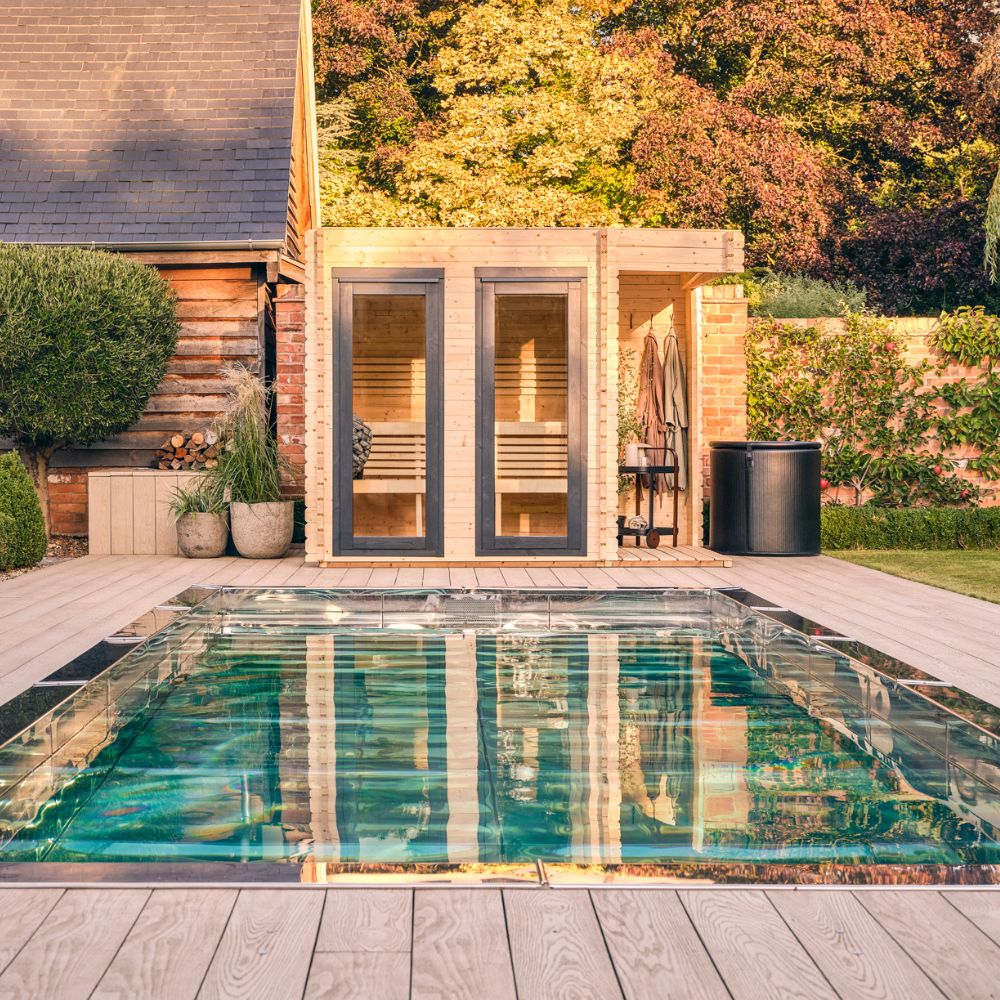
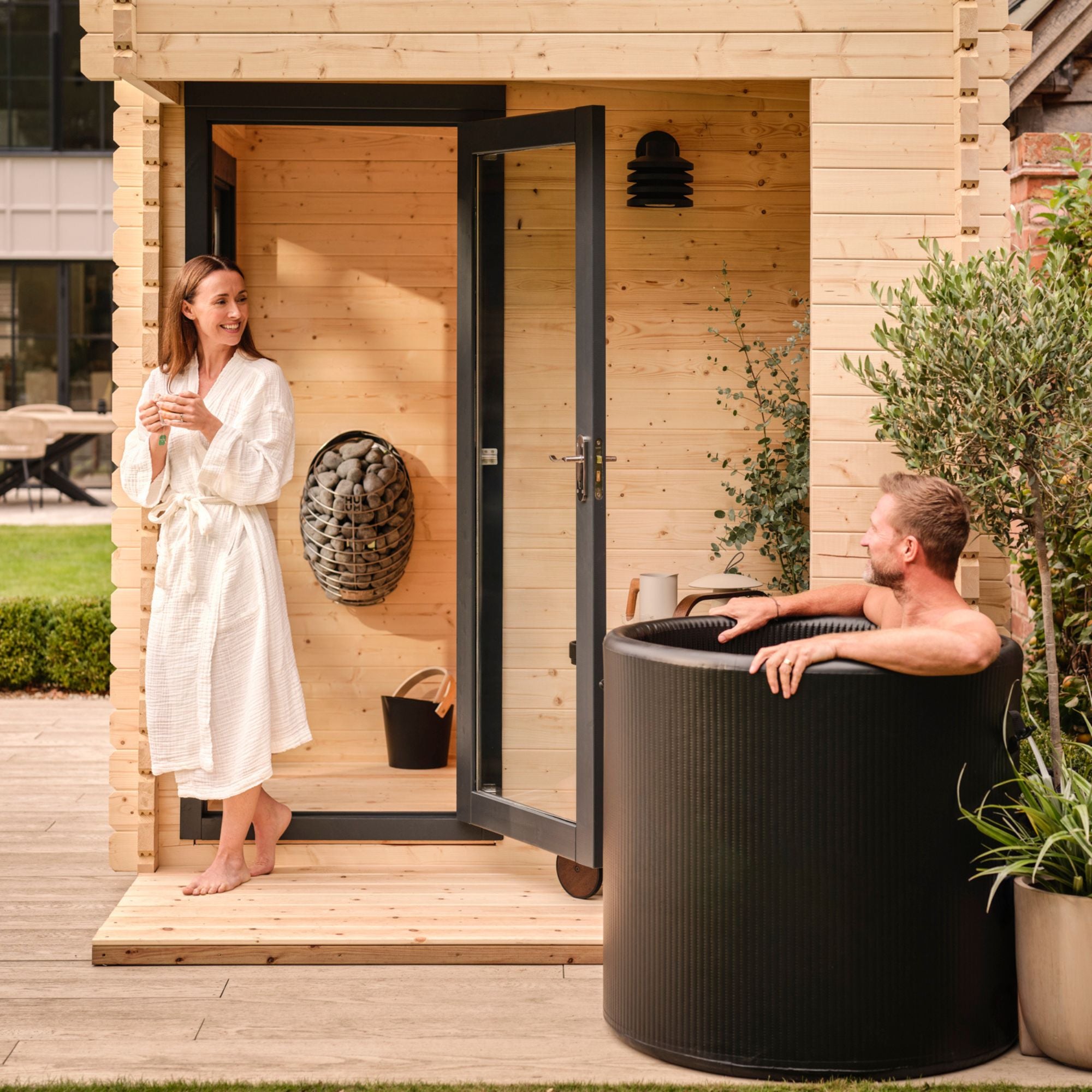
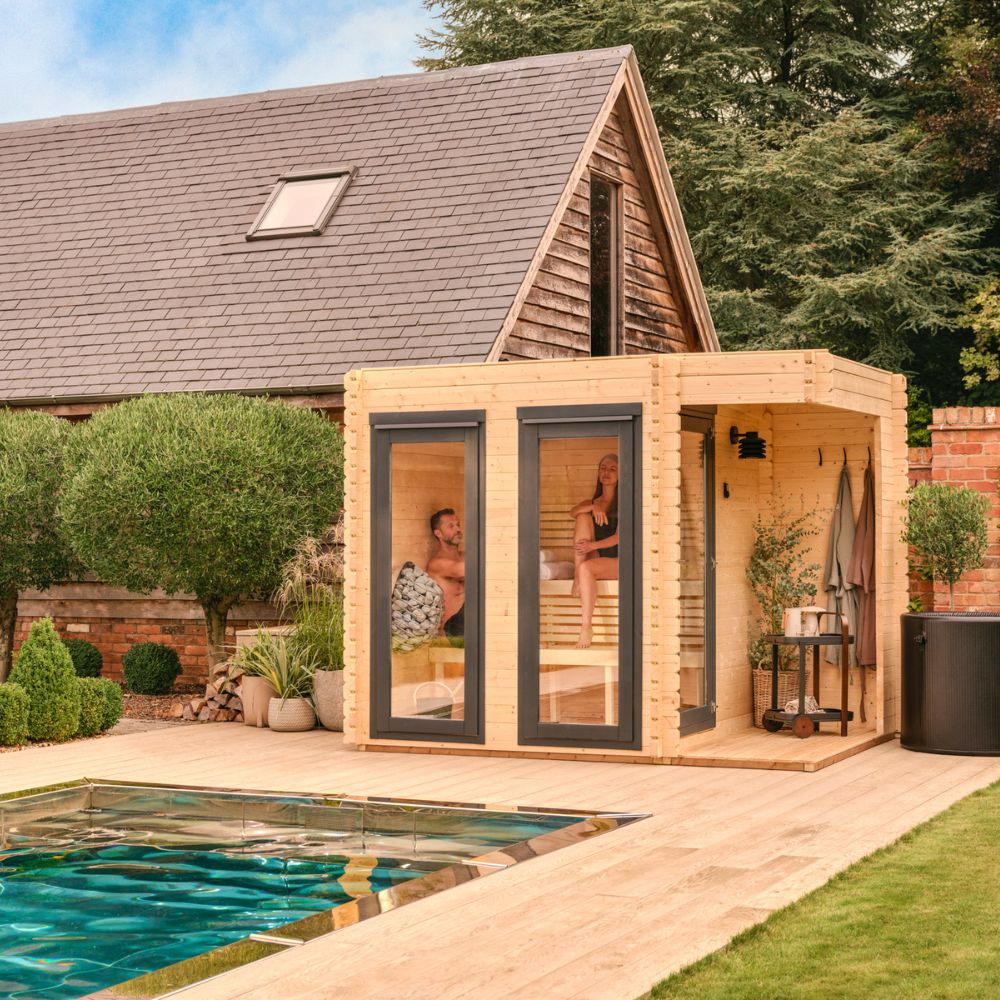
For example, a small, basic sauna may be all you need if you plan to use it alone or with one other person, however, if you’re a larger household or plan on using the sauna for socialising, a more spacious sauna with a veranda or changing room would easily suit your and your friends' needs.
Once you’ve determined who will be using the sauna, you can begin to think about additional extras such as areas to store towels and belongings, as well as other perks and features you can add to your outdoor area.
It’s also worth checking where the sauna will sit in relation to your home. If it’s in very close range of your home, then a changing room or additional area will not be necessary; however, a secluded position may create a need for additional space whilst offering a greater sense of privacy.
How much space do you need for an outdoor sauna?
Think about how you realistically expect to use your sauna rather than choosing a capacity for occasional use. This will help you determine the general size of the sauna that you require. Start by measuring the area where you plan to place the sauna, then compare this to the dimensions of the models you’re considering. Remember to leave enough space to be able to manoeuvre around the sauna, for the doors to open, for maintenance, and to create ample ventilation.
Other Space Selection Considerations
| Decerning Factor | Decerning Factor |
|---|---|
The Foundation |
A level solid, well drained foundation, ideally concrete or compacted gravel, ensuring the sauna is dry, stable and secure. |
The Location |
A private spot with a pleasant view, a reasonable distance from the property if it permits, while also maintaining Wifi signal if the Wifi controller has been selected. |
The Light |
Positioned in your garden to get the best of the natural light, morning sun in the colder darker months, or shaded area in the summer months. |
The Result |
A perfect synergy of reliance, convenience and relaxation that can be used time and time again. |
Tip: Leave enough space around the sauna for ventilation and easy access.

What type of sauna should you buy?
When deciding on an outdoor sauna, the options are likely to be between traditional log cabin saunas and more contemporary cube saunas.
Log cabin saunas offer a traditional Scandinavian appearance and a sturdy timber frame. The Waltons Novi range includes a variety of traditional standalone saunas, as well as models with additional changing rooms, verandas, or both. Whether you opt for a smaller sauna for personal use or prefer a larger social space, a log cabin sauna adds a classic and timeless aesthetic to your outdoor space.
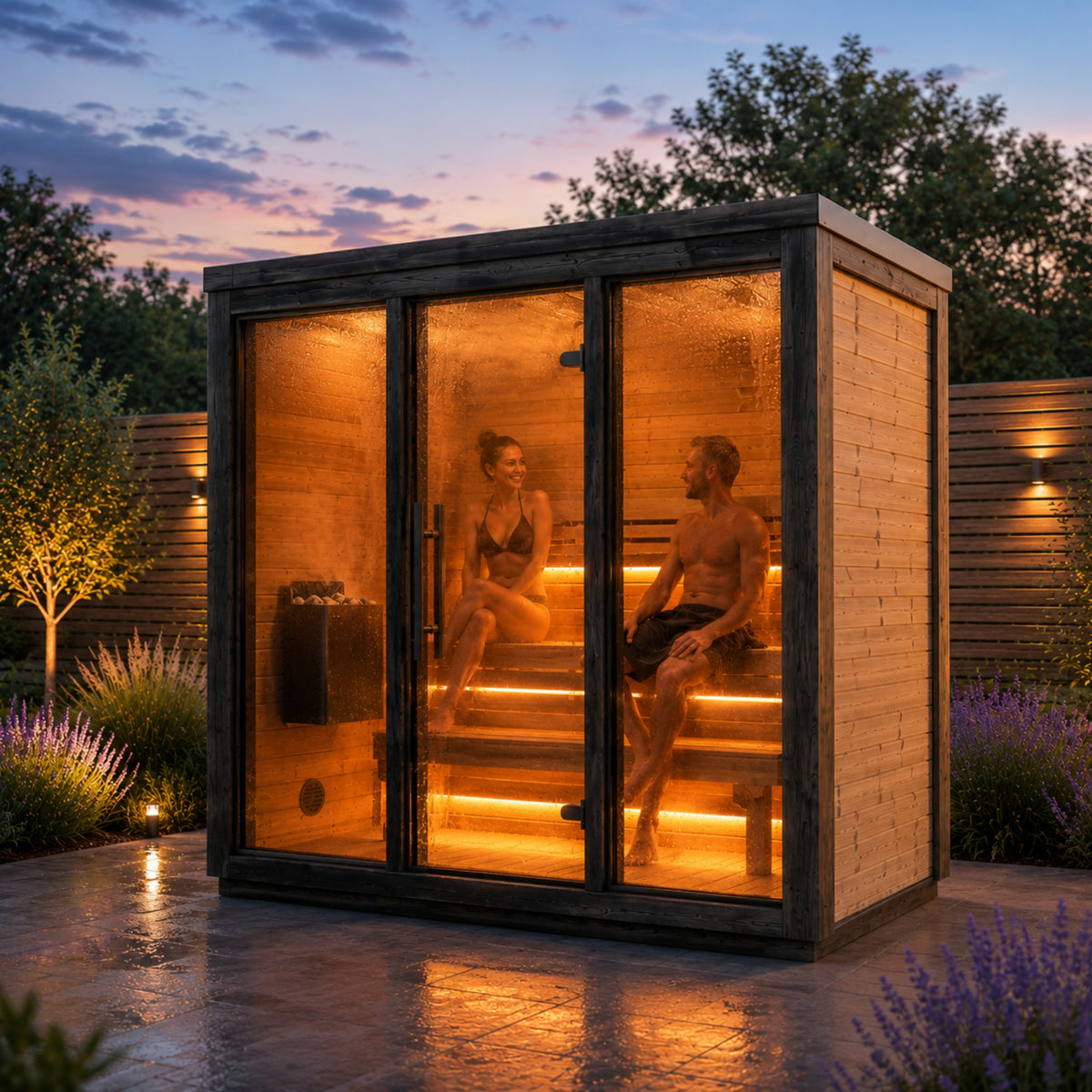
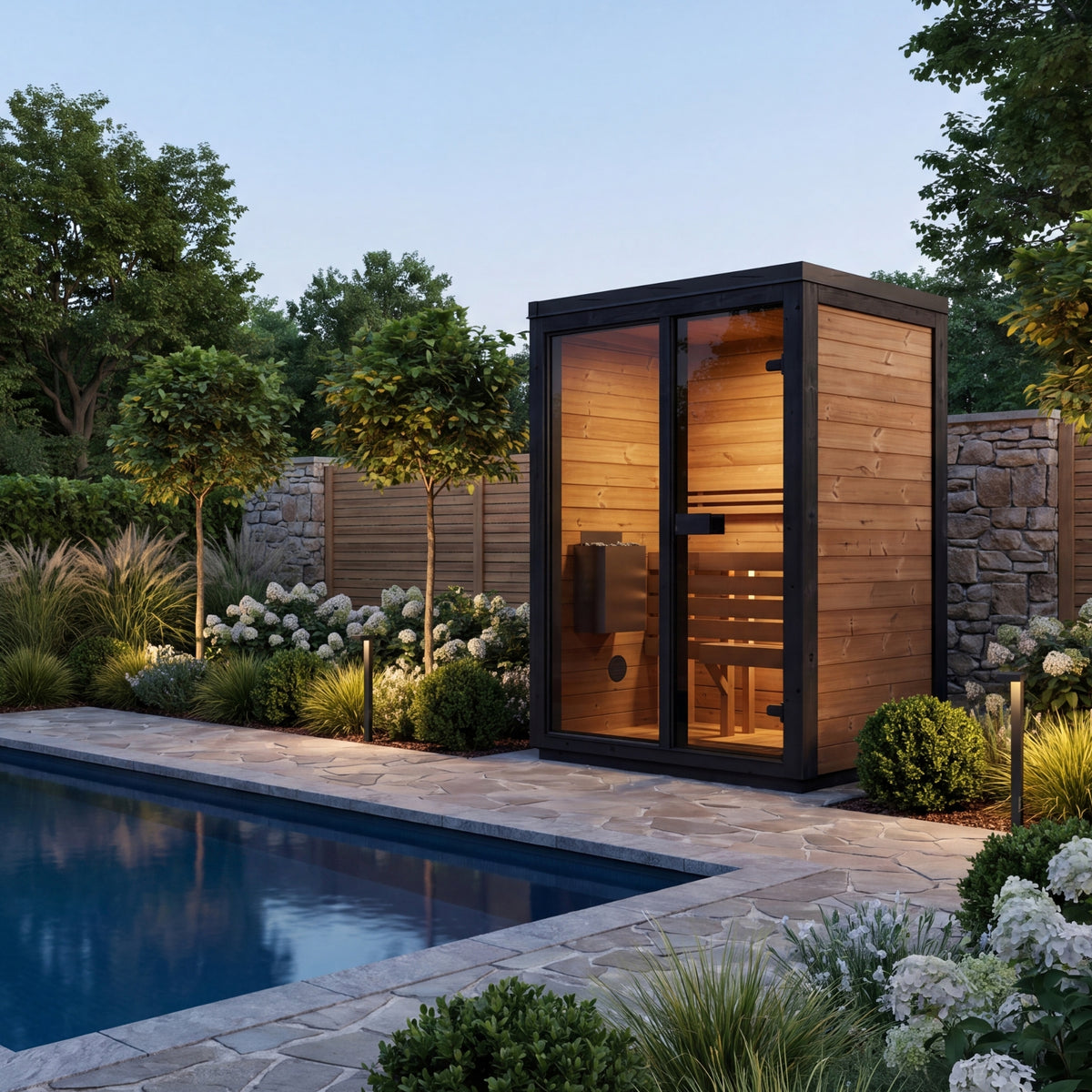
Cube saunas offer a more contemporary design and make efficient use of limited space. Their compact design allows benches to run alongside the length of the wall, creating ample seating without requiring the square footprint of a traditional sauna. The Novi Cube range perfectly combines a modern style with practical functionality.

Electric vs Wood-Fired sauna: Which is best?
Electric and wood-fired heaters offer entirely different experiences, whether it be their aesthetic or the running costs. Electric heaters are convenient, easy to control and can typically heat the sauna within 30 minutes. Wood heaters don’t require any electricity and require a steady flow of fuel, ash management, and suitable ventilation.
The most significant difference between the two is maintenance, as electric heaters must be professionally installed and require a mains connection, whereas wood saunas require a suitable chimney, consistent cleaning, and a safe supply of firewood.
The best model will depend on your preferences, available utilities, and how you wish to use your sauna. For a more detailed comparison, take a look at our Wood-Fired vs Electric Sauna Guide.
What base does an outdoor sauna need?
An outdoor sauna needs a sturdy, level, and well-drained base capable of supporting the building. The first step is to assess the area where you wish to install the sauna, and if it’s already a firm, flat and suitable base, a concrete base may not be necessary.
The types of bases available include gravel, concrete, or decking, and their suitability will depend on where you wish to install your sauna and the condition of the ground below it. No matter what type of base it is, it’s required to be level, stable, and no smaller than the footprint of the sauna.
Due to the importance of the base, Waltons will only install a new sauna on a base that has met the company’s requirements. If you need help deciding on what base is best for your sauna, feel free to contact us and a member of our team would be happy to go through your options.
Do you need planning permission for an outdoor sauna?
Outdoor saunas do not typically require planning permission due to their classification as an outbuilding; however, restrictions can still apply, so we recommend contacting your local authority before purchasing a sauna to confirm that you meet the relevant requirements.
Under permitted development rules, the building needs to be used for domestic purposes and not take up more than 50% of the available outdoor space. If it’s also 2 metres within a boundary, the maximum height of the building is typically 2.5 metres. Additional restrictions may apply to listed buildings and conservation areas also.
What materials should you look for in an outdoor sauna?
A well-built sauna will be constructed with materials that can withstand the changing seasons whilst also being suitable for high internal temperatures and humidity. It’s important to assess the durability of the timber, and the sturdiness of the build, making sure that the roofing, windows, door, and joints are airtight and can resist the outdoor weather.
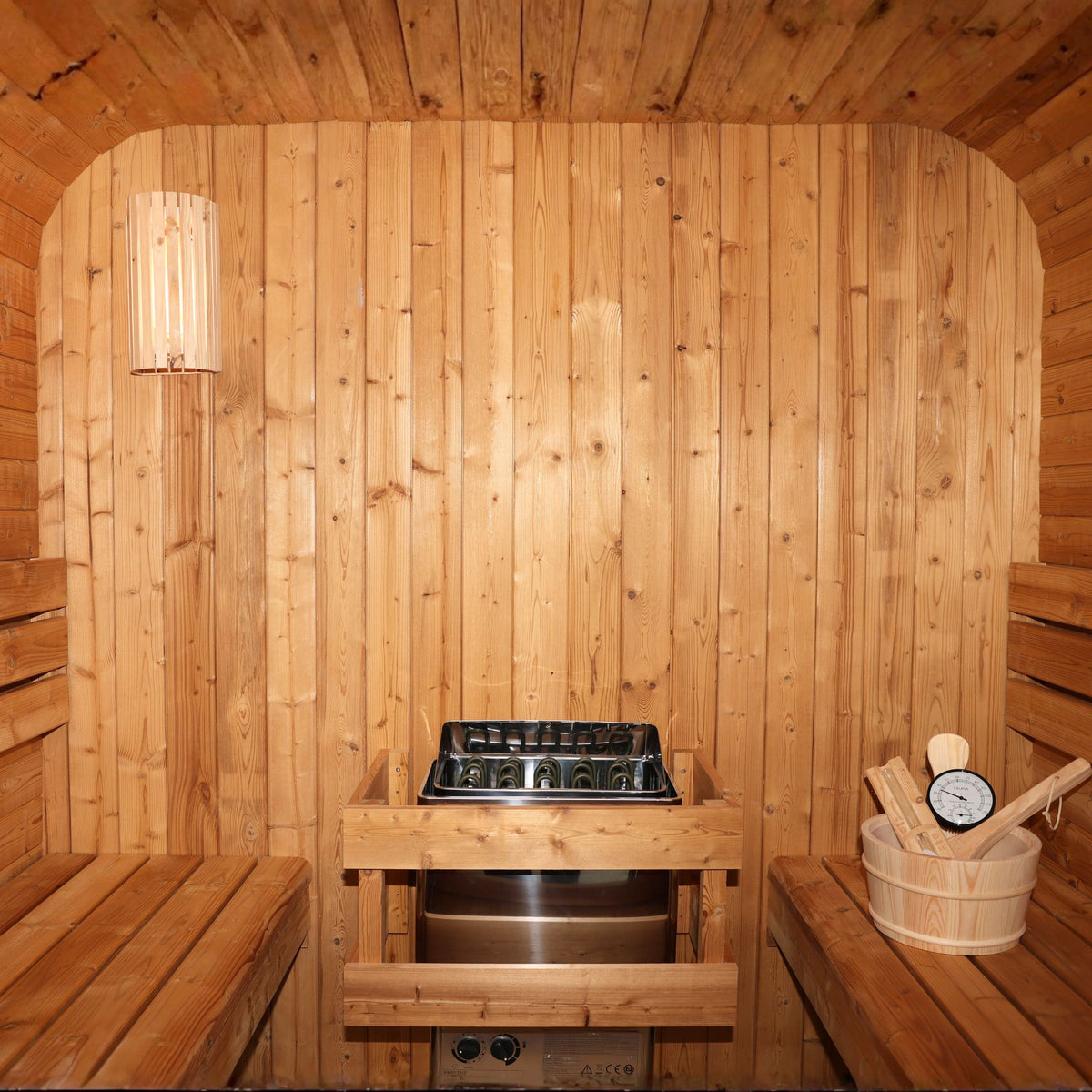
Waltons outdoor saunas are built with sustainably sourced timber along with low-heat-conductive materials. We specifically select Aspen timber for its low heat conductivity and suitability in humid environments, and we build our saunas using a tongue-and-groove joinery method that promotes durability and helps maintain optimal internal temperatures.

How much does an outdoor sauna cost to buy and run?
The cost of an outdoor sauna will depend on its specifications, design, heating system, and any additional features, yet the biggest influence on cost will be the size of the sauna, with a smaller 2-person sauna costing significantly less than a larger 8-person sauna.
When budgeting or assessing the cost of a sauna, Waltons recommends considering all aspects of the installation, from the initial assessment of the land and base requirements, to the final furnishings and running costs. By considering all stages, you create a more accurate budget and avoid any unexpected costs.

Delivery and installation
When purchasing and organising the delivery of your sauna, we recommend you check that there is ample access from the delivery point to your chosen location. Waltons provide kerbside assistance as standard, and if you opt for our installation service (if eligible), we will deliver and fully install the sauna on the pre-prepared base.
The installation service includes the construction of the building, application of the roof covering, and removal of excess packaging, but does not include the installation of the chimney flue or sauna heater, neither supplying any electrical work or sauna controls.
If you wish to arrange the delivery and installation of your sauna or simply want to get more information, please get in touch with us, and we’d be happy to answer any logistical questions you have.

How much maintenance does an outdoor sauna need?
All outdoor saunas require maintenance; however, the model and heating type of your sauna will dictate the frequency and type of maintenance that’s required.
All saunas, regardless of their model, require a high-quality, suitable wood treatment that’s applied when necessary or annually (depending on the manufacturer's advice or maintenance schedule). This helps to maintain the quality and strength of the wood, ensuring many more years of use from your sauna.
Depending on the heating type of your sauna, the maintenance will vary. For electric-heated saunas, there is very minimal internal maintenance, requiring you to keep the interior clean and tidy, as well as doing regular checks on the doors, windows, and joints to ensure structural integrity. For wood-fired saunas, there is more cleaning and maintenance required, including ash removal and chimney checks, as well as frequent structural checks.
Ready to choose your outdoor sauna?
Choosing an outdoor sauna ultimately comes down to finding the right size, design, heating system, and suitability for your outdoor space. Whether you prefer the traditional appearance of a log cabin or you’re drawn to the compact, sleek design of a cube sauna, it’s important to consider the practical requirements just as carefully as its aesthetic and use.
Once you’ve assessed your space, base, utilities, and budget, it will be a much easier process to find the best-suited sauna that you can enjoy all year round.
Saunas
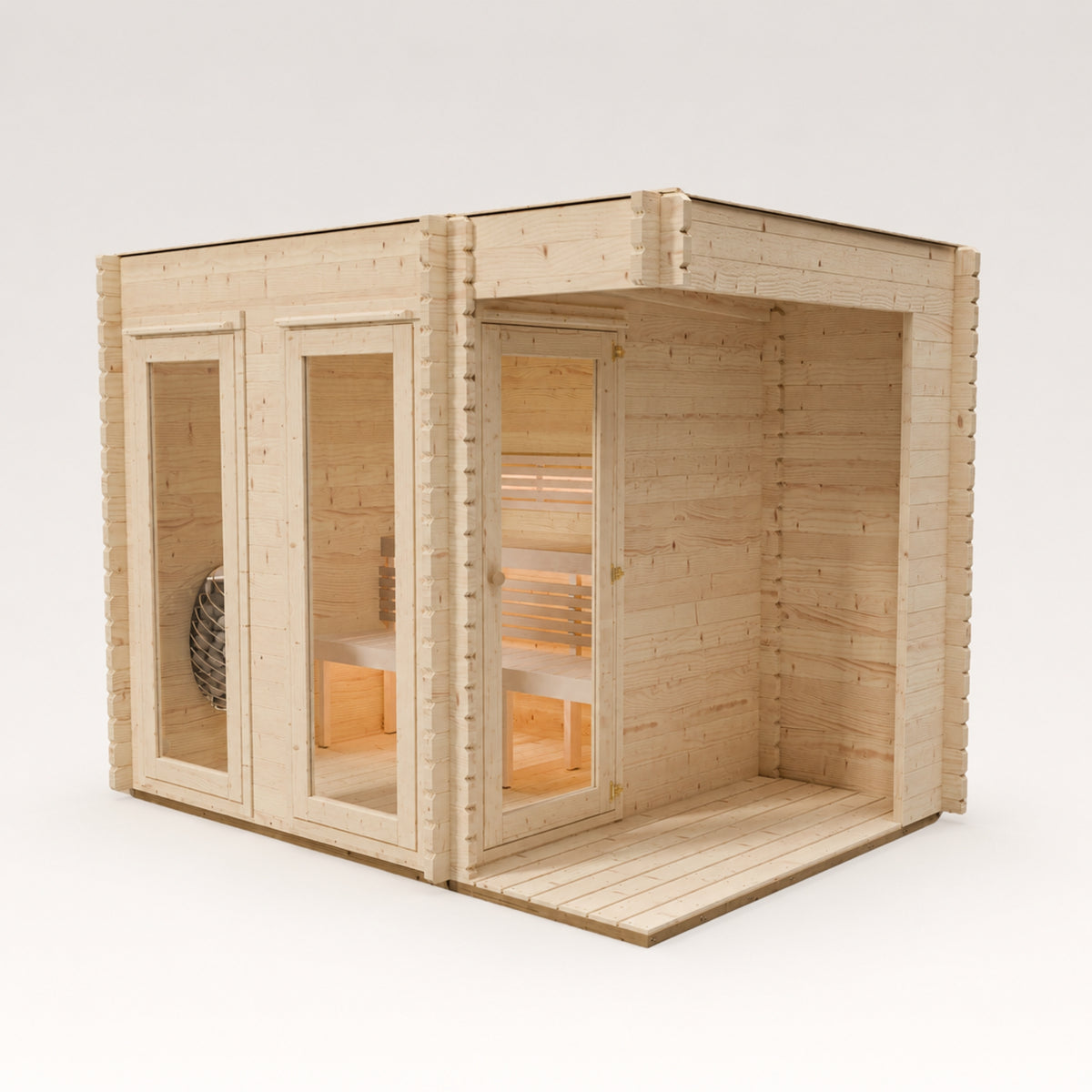
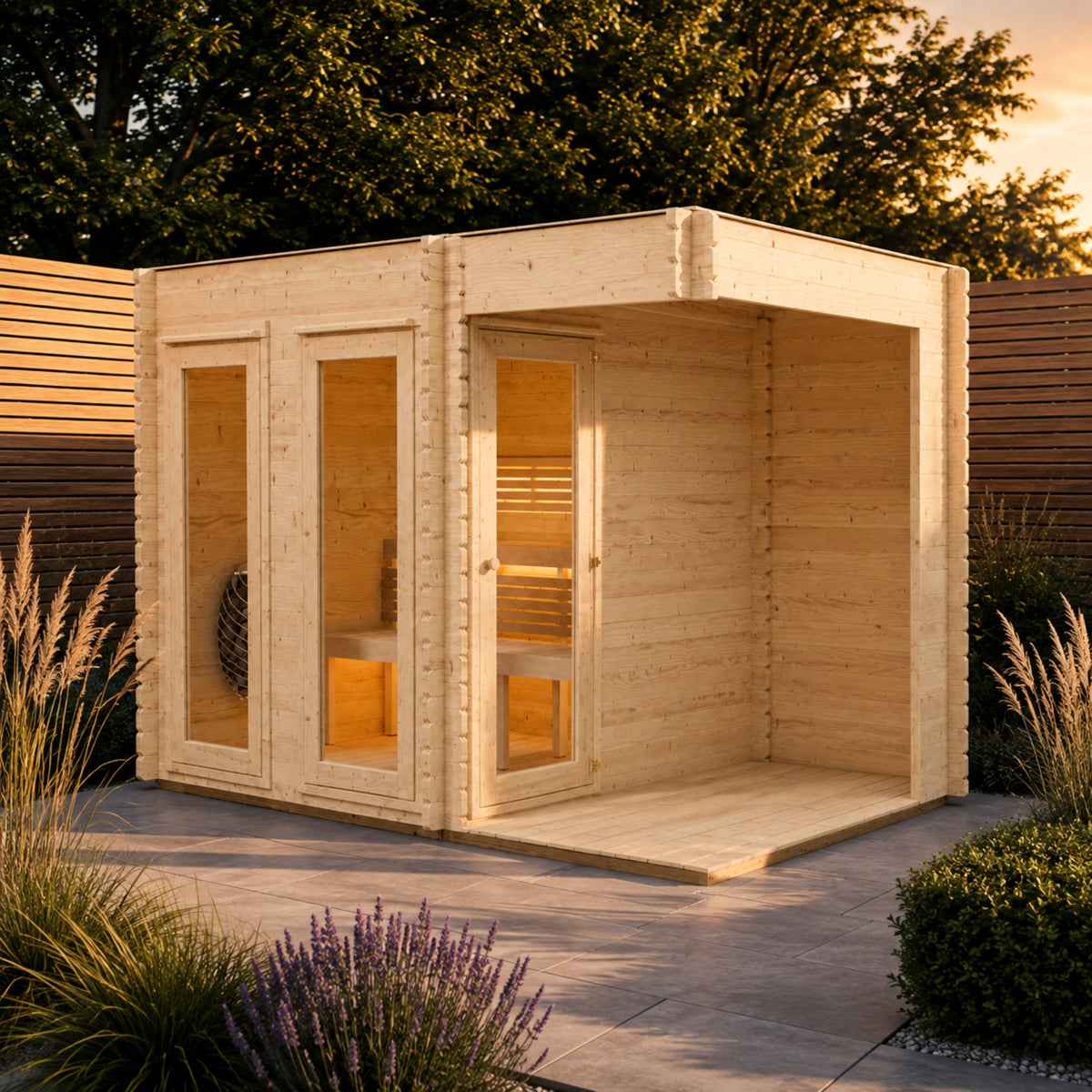
Novi Outdoor Sauna With Small Veranda


Novi Outdoor Sauna With Large Veranda


Novi Outdoor Sauna With Changing Room and Large Veranda

Novi Outdoor Sauna With Changing Room and Small Veranda


