Potting Sheds
Purpose-built potting sheds for sowing seeds, potting seedlings and growing fruit, veg and flowers, in a variety of sizes and styles.
- Rated Great on Trustpilot (opens Trustpilot in a new tab)
- Standard 10-year anti-rot guarantee
- Sustainable and certified timber
- Shatterproof styrene windows
Need help choosing? Call 01636 821 135 or
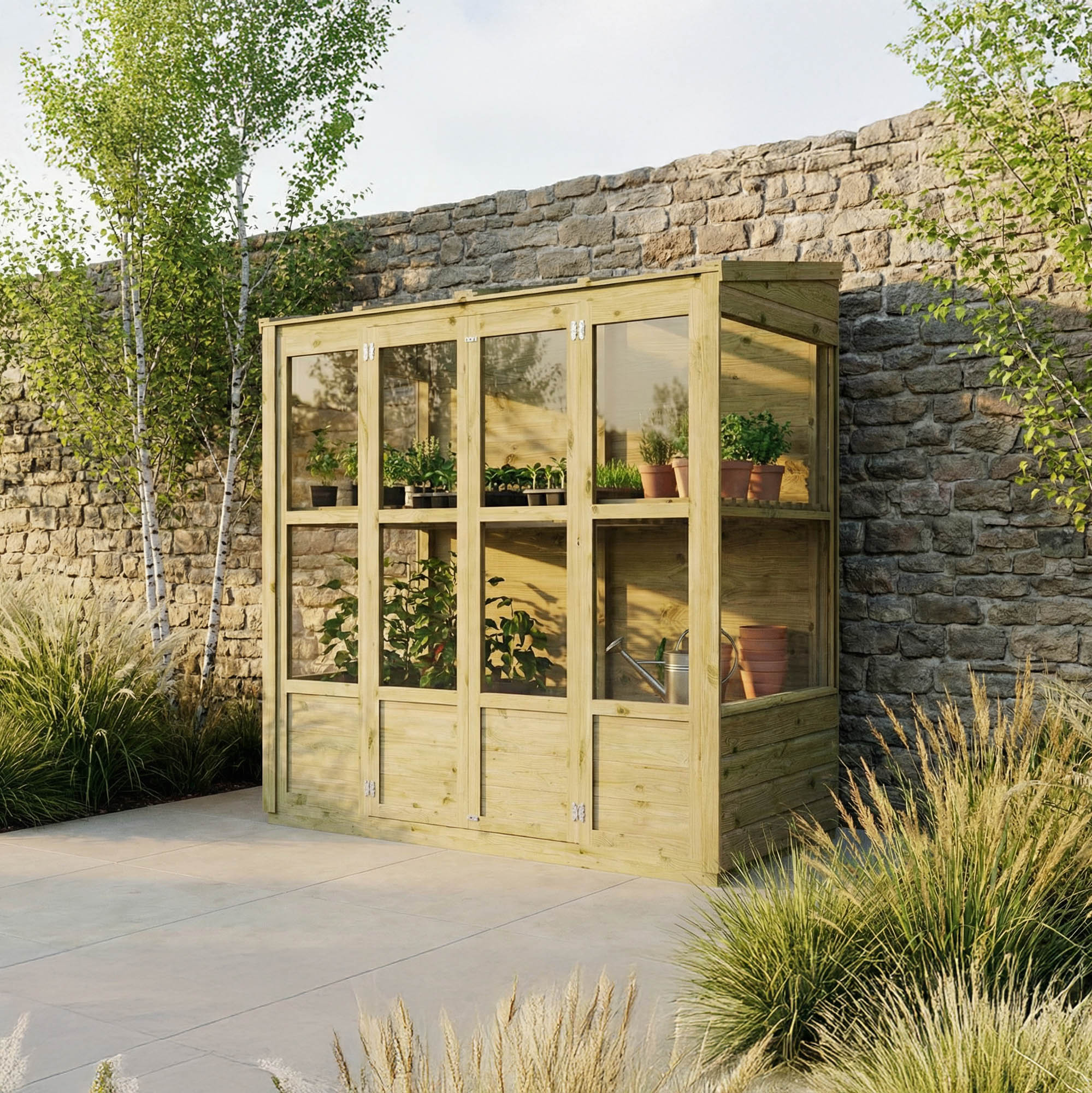
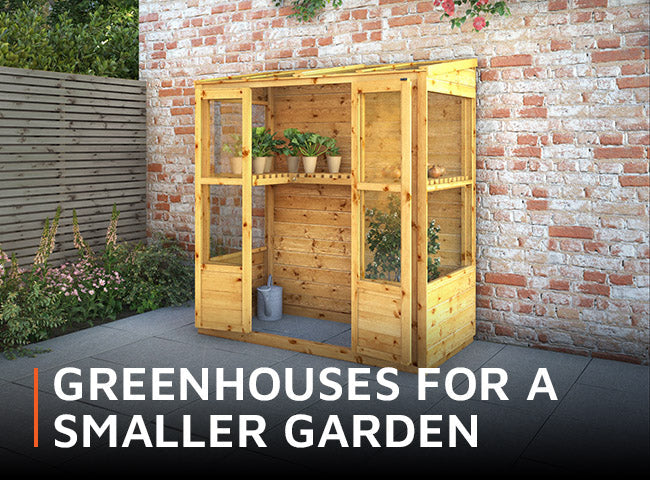
6 x 3 Evesham Victorian Growhouse


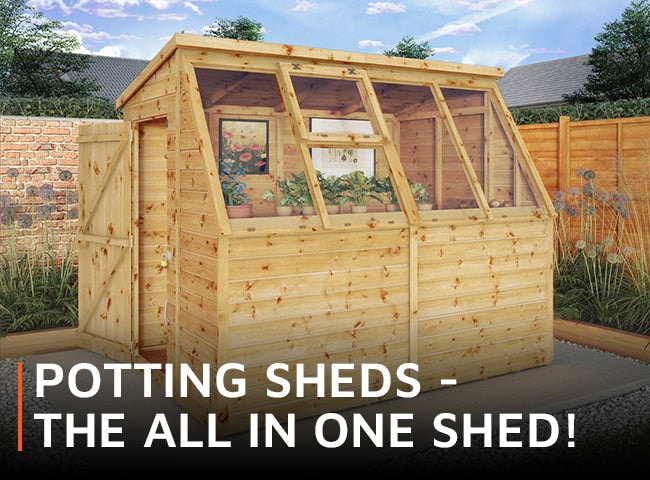
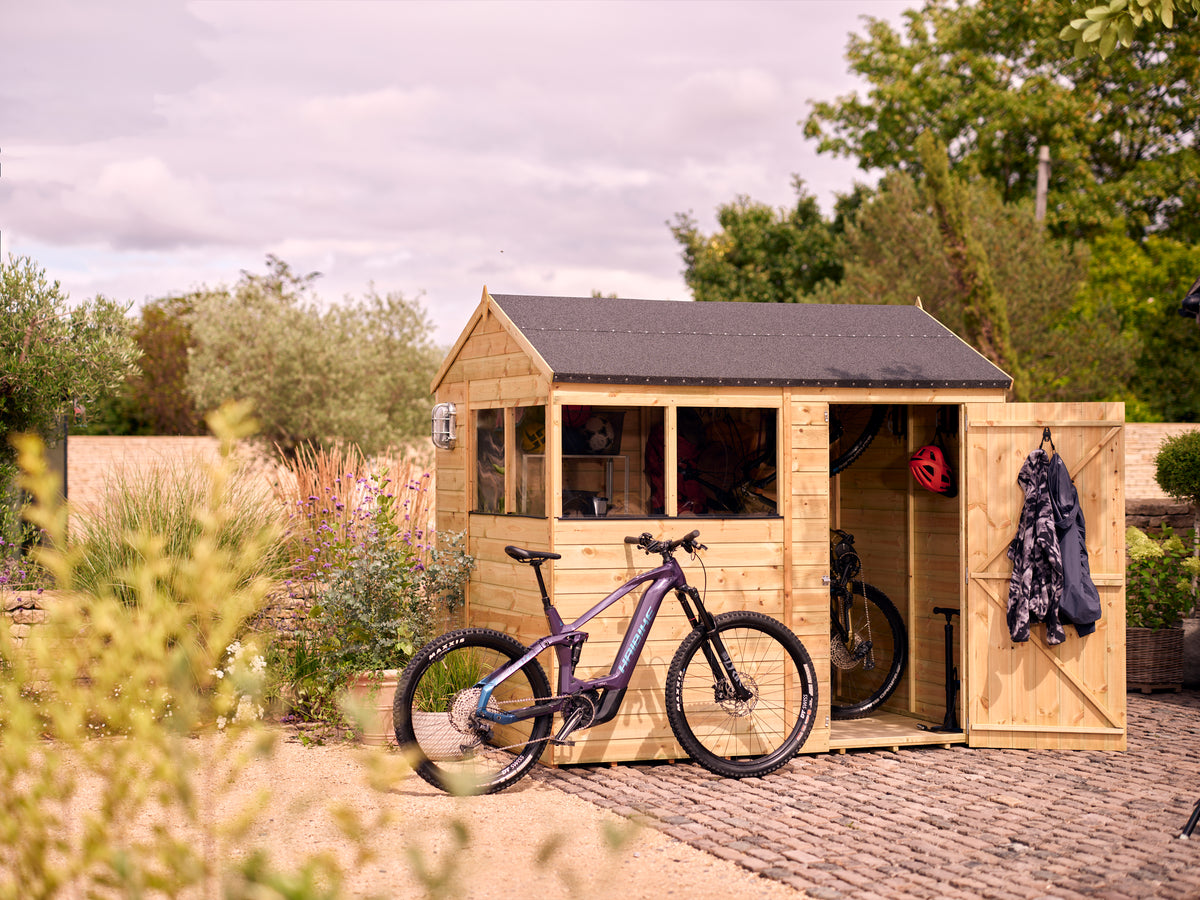
8 x 6 Shiplap Premium Potting Shed

 Buy now. Never overpay.
Black Friday Price Match Guarantee
If you buy from us now and the price drops during our Black Friday sale, we'll refund the difference.
How it works
Buy by 1st December. *Terms apply.
 Need help choosing?
Talk it through with a product advisor. No hard sell, just help.
Call 01636 821 135
Monday to Friday, 8:30am to 5pm
What you get with a Waltons potting shed
- Standard 10-year anti-rot guarantee
- Sustainable and certified timber
- Shatterproof styrene windows
- Guarantee
- A standard 10-year anti-rot guarantee for your added peace of mind.
- Timber
- The same sustainable and certified timber construction and UK site of manufacture as all our other wooden sheds, with the sustainably sourced timber planed for a smooth finish.
- Cladding
- Interlocking shiplap tongue and groove cladding creates a sturdy and stable structure, and our potting sheds are watertight and draught resistant.
- Glazing
- Shatterproof styrene windows let light flood in to help plants thrive.
- Sizes and styles
- A 6x3 Victorian grow house, an 8x6 potting shed with large lean-to styrene windows and an 8x8 potting shed/storage shed combination unit.
- Base
- For smaller units, a wooden base works fine, and you can purchase these along with your potting shed. For larger sheds and potting sheds, a patio slab or concrete base is a much better option.
- Uses
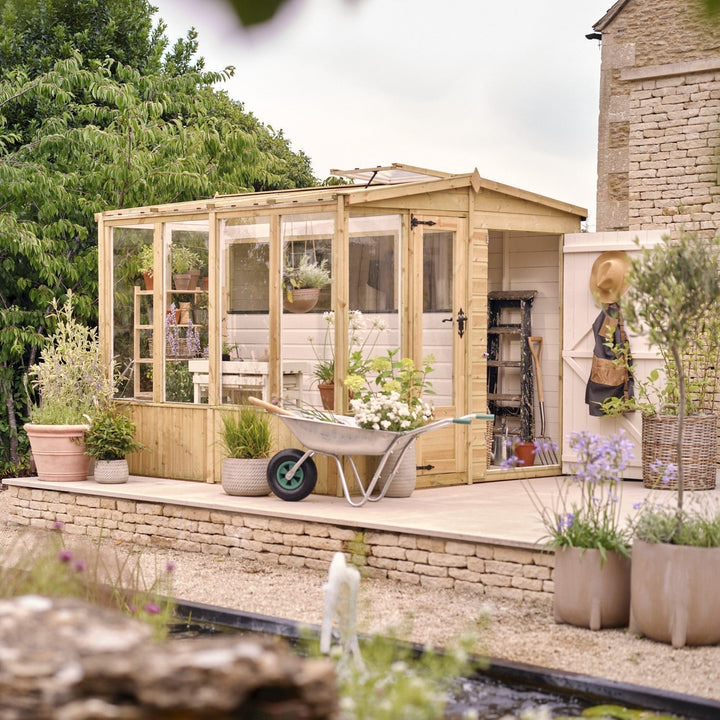
- A purpose-built unit suitable for sowing seeds, potting seedlings and growing all your favourite fruit, veg, flowers and more.
Potting shed questions
The questions we're asked most often.
What is the difference between a potting shed and a greenhouse?
A greenhouse helps to grow plants in a warmer, controlled and protected environment under glazing, which allows for plenty of sunlight and the trapping of heat. A potting shed, by contrast, serves as a more practical garden workspace, with wall space for storage and shelter. It is ideal for growing seedlings, storing compost and tools while caring for younger plants.
What features should a good potting shed have?
A quality potting shed will be well ventilated, provide adequate natural lighting, protect against inclement weather and provide ample workspace. Some items to consider when looking at potential potting sheds are windows to let natural light in, stable flooring, durability and space for shelving. An optimal quality potting shed will enhance your gardening experience as it provides easy access to the tools and products needed to grow and tend your plants.
What sizes and styles of potting shed do you offer?
Choosing a potting shed for a small patio or courtyard garden? If you have the perfect spot for a small plant prep area, we have the ideal potting shed for you. Our 6x3 Victorian grow house features a pent roof with vents and double-opening doors, and is perfect for positioning against a wall or fence. For those in search of something bigger, take a look at our 8x6 potting shed with large lean-to styrene windows and an opening window for optimal ventilation. For those looking for versatility, our 8x8 potting shed/storage shed combination unit offers the best of both worlds: plenty of room for plant work with enough storage for all your gardening tools and equipment.
What are your potting sheds made from?
Our potting sheds are constructed using the same sustainable and certified timber construction and UK site of manufacture as all our other wooden sheds. We also offer a standard 10-year anti-rot guarantee for your added peace of mind. For glazing, we’ve opted for shatterproof styrene, and with quality shiplap construction, our potting sheds are watertight and draught resistant, creating optimal growing conditions for your plants.
How are Waltons potting sheds built?
Waltons potting sheds use interlocking shiplap tongue and groove cladding to create a sturdy and stable structure to withstand the elements. The sustainably sourced timber is planed for a smooth finish, and shatterproof styrene windows let light flood in to help plants thrive.
Are potting sheds suitable for year-round use?
Yes, a potting shed can facilitate gardening year-round. While an uncovered bed of seeds is exposed to elements like wind, rain and extreme temperatures, a potting shed provides protection. A potting shed also offers you a dry space to continue gardening when the weather outside is less than ideal.
How do I use a potting shed?
A potting shed is a practical place to sow seeds and grow cuttings. Give yourself easy access to your plants by placing them on shelves or benches. A potting bench is also handy to store spare gardening tools and accessories, such as your pots, compost, seed packets, gardening gloves and trowels. If you’re keeping taller tools protected from the elements, a potting shed offers plenty of storage space.
Where should I site a potting shed?
A potting shed (like any other garden building) must be on a level shed base made from concrete, wood or patio slabs. Avoid shady spots and install the shed in a sunlit area where large plants, shrubs or trees don’t overshadow it. Place it somewhere convenient with easy access and a south-facing aspect to maximise sunlight.
How do I install a potting shed?
To ensure optimum performance and longevity, it’s very important to clear and level the ground before installing your new potting shed. You should always ensure your shed sits on a firm base: for smaller units, a wooden base works fine, and you can purchase these along with your potting shed. For larger sheds and potting sheds, a patio slab or concrete base is a much better option. For step-by-step instructions on how to build the right base for your new potting shed, head over to our guide to building a shed base for all the information you need.
Do potting sheds require a base or special installation?
A flat, level and stable base is necessary for a potting shed. Uneven foundations will cause timber to move and twist. Even foundation solutions include concrete, paving slabs, ground-level bearers or a timber frame.
How do I organise a potting shed?
Properly organising your potting shed is the best way to optimise space and always know what you have and where. Hooks are handy for small tools that you always seem to misplace. Use wooden or plastic storage boxes to contain open bags of compost and dedicate a spot to seeds for future use. You can also arrange your plants into zones, such as herb and vegetable sections.
Can I speak to someone before I order?
Yes, we're happy to help. Call us on 01636 821 135 (Mon-Fri 08:30-17:00), email websales@waltons.co.uk or fill out the form on our Contact page.
Where can I find delivery, installation and guarantee information?
See our delivery information, installation information and guarantee information pages.